Frankie the flamingo news 2025 – 2026
Frankie hatched on 1st July 2025, the very first flamingo chick to hatch on the nest and be reared by its parents at Paradise Park.
The latest information is in the statement below, and the latest videos of Frankie in France are at the bottom of the statement.
Statement on 12th November 2025 by Curator David Woolcock
All of us at Paradise Park would like to express our sincerest thanks to the public, and both the local and national media, for their assistance in the search for Flamingo Frankie.
When Frankie left our site on the morning of Sunday 2nd November, sometime between 8am and 8:20am, we were devastated. Immediately, we began searching for her and informed the media, asking for their assistance.
One confirmed video sighting, see below, on Sunday 2nd November showed Frankie flying high and strong over the Hayle Estuary area. Further sightings were reported to us over the coming days, none of which could be confirmed. In addition, there was also a White Stork in the area, which added to the possible sightings.
The video below by Ben Oakes shows Frankie flying at Hayle Estuary on Sunday 2nd November 2025 at 12:30pm.
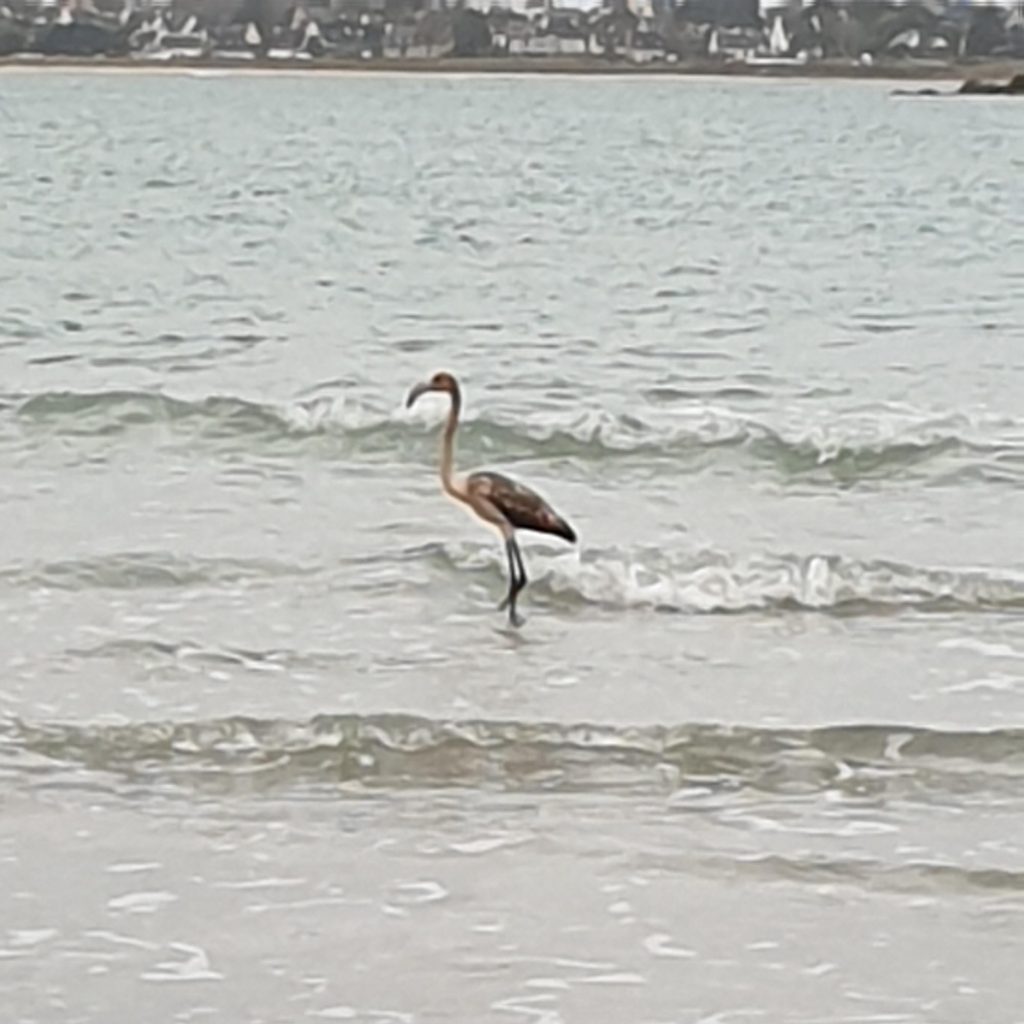
However, we now know that by 9:49am on Monday 3rd November, Frankie was already at the Île Aganton, on the north coast of France. This sighting was reported on the French national citizen science portal for nature. This all became apparent on 9th November, when a further set of photographs of Frankie, looking fit and well and now along the coast at Plage de Keremma, were forwarded to us.
Below: Photograph taken at Plage de Keremma, Finistère, Brittany, France, sent through on 9th November courtesy of Alice Beddows.

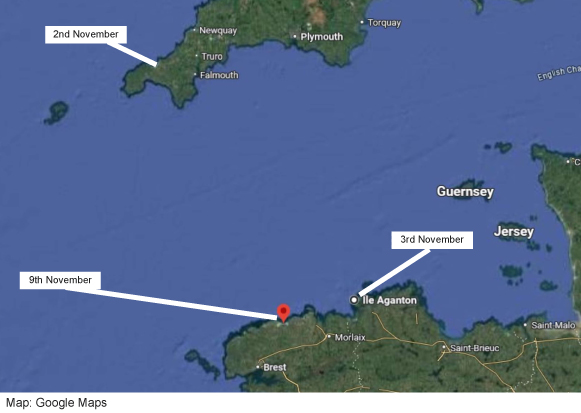
Between 2nd and 9th November, Park staff were out at all times of the day and night, in all weathers, following up on potential leads in order to try and retrieve Frankie. When the confirmed sighting of her in France came to our attention on 9th November, we immediately knew it would be unlikely that we would be able to return her to the Park, for the reasons shown below.
It was never our intention for Frankie to end up in the wild. There are a number of reports of similar situations where flamingos have lived for many years and thrived, including over European winters, so while we will continue to worry about her, it is a position we have to accept.
We are confident that her movements will be observed and logged in France by citizen science members, and feel relieved to know that she has shown the resilience and skills that will serve her well as a “wild” flamingo. Frankie’s parents and the rest of the flock at Paradise Park continue to do well.
Below: Photo courtesy of Mickaël Belliot. Taken on 10th November 2025 at Goulven, near Plage de Keremma, Brittany, France.
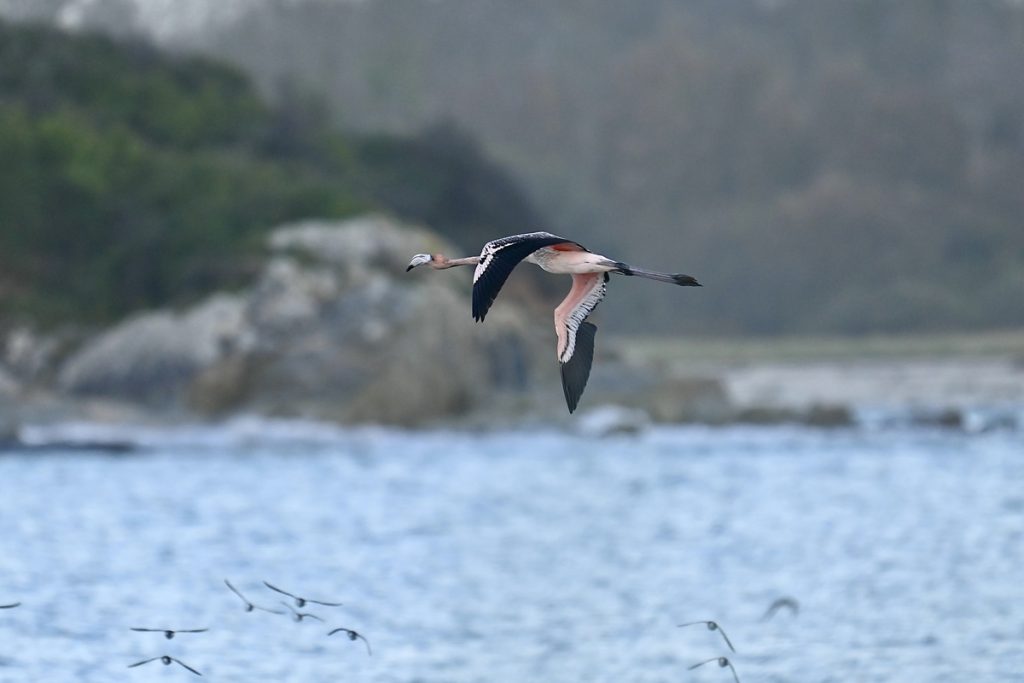
Mickaël Belliot, who took the photograph above which confirmed her location on the coast of France, also captured the video footage below of her at Plage de Keremma on 13th November. A huge thank you for allowing us to share this special video.
The video below has been kindly supplied by Quentin Cactus, see Instagram page here, taken on 18th November 2025 at Goulven Bay, northern France.
Below, another video courtesy of Quentin on 24th November in the same area, Goulven Bay, northern France.
Sighting on Christmas Day, 25th December 2025
Great news to get a new sighting of Frankie, who was spotted by Chris Rodrigo on Christmas morning in the Lanvoy area, near Le Faou village in Finistère, so she has travelled a little further south. He commented that she seemed good, flying from east to west along the shore. It is a protected area and home to many birds, including herons, wild ducks and swans.
A big thank you to Chris for this information. He will try to get a photo if he spots her again.
Possible sighting on 4th January 2026
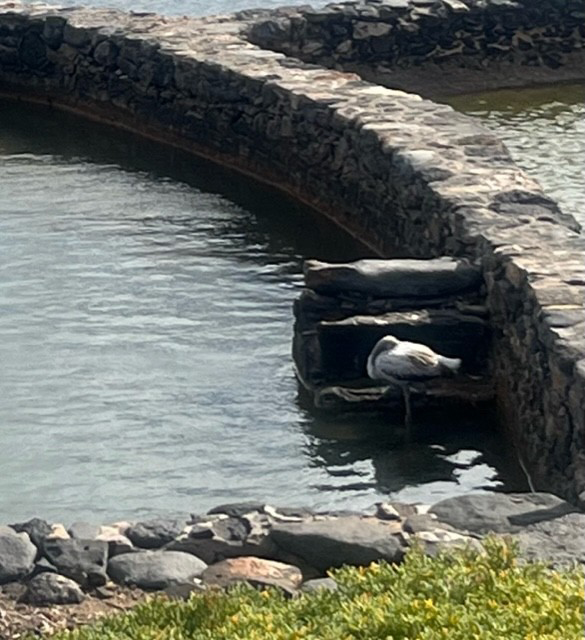
There was a possible sighting of a juvenile Caribbean Flamingo on 4th January at the Salt Museum, Salinas del Carmen, Fuerteventura. We really cannot know for sure if it was her, but the flamingo was only there for a short time, so it could have been her resting while on her travels and going much further afield.
FAQ
Can Frankie survive in the wild, and will she meet other flamingos?
Flamingos are really quite hardy creatures, sometimes flying hundreds of miles and crossing entire continents. Frankie was parent-reared, so no doubt learnt a lot from her parents. She was feeding independently and was a supremely fit young bird before she flew off from the Park.
She has been seen with other birds, which will give her some company, and all the evidence that we have seen of her in France shows a well-adjusted, well-fed bird doing extremely well. We do not know if she will move on elsewhere. Large flocks of flamingos live in southern France and to the north at Zwillbrocker Venn, on the border of the Netherlands and Germany. We are in touch with people in France who plan to continue their updates and will pass on any news on this page.
Why did Frankie fly away?
Frankie had the feathers on her right wing clipped. This involves shortening some of the primary and secondary feathers on one wing only, and this is short-term, as the feathers regrow in full at each moult. She was at an age when she became independent of her parents and had a strong instinct to take off and explore.
How did Frankie gain flight if her wing was clipped?
Three things come into play here.
Firstly, Frankie’s wing feathers were continuing to grow as she developed. On two occasions, her feathers were checked and trimmed to prevent her gaining full flight.
Secondly, when feathers grow, they grow in something known as a blood quill, which looks similar to a drinking straw filled with blood. These growing feathers cannot be trimmed until the feather erupts from the blood quill sheath.
Thirdly, wing clipping inhibits the ability to take off, but not necessarily the ability to fly once airborne. Young birds, including flamingos, are often seen flapping their wings to exercise them before they are ready for their first flight. Frankie had become independent of her parents, and we suspect that it was in just such an exercise period that Frankie was caught by a gust of wind, which made her airborne. Then she was on her way.
Will you go and get her back from France?
In short, no. As much as we would like her to return to the Park, there are numerous issues. First, we would have to catch her. Being parent-reared, she has a healthy wariness of people. She is not tame and is a fit young bird who has found a good feeding location.
She is now in another country. If she were to be caught in France, she would then need to be housed at a French institution to be health screened as part of the UK importation process. But it is unlikely that any would agree to hold Frankie, as she has been mixing with wild birds and may have been in contact with avian influenza infected birds. That is our biggest concern for her. Avian influenza continues to be a major threat to wild birds, and we hope that Frankie remains safe and healthy.
As an unplanned event, Frankie’s escape to the wild received huge interest and media coverage. However, Paradise Park Wildlife Sanctuary has worked tirelessly over decades to breed and release other birds into the wild in vital national and international conservation projects.
Examples include:
- Over 60 Red-billed Choughs for reintroduction projects in Jersey and Kent, where the species had been locally extinct for up to 200 years. For more information, please click here.
- 10 Blue-throated Macaws to Bolivia, where fewer than 400 of the species still exist in the wild. For more information, please click here.
- 40 Mitchell’s Lorikeets to Bali, where fewer than four birds remain in the wild. For more information, please click here.
Below is Frankie’s blog before she went missing on 2nd November 2025.
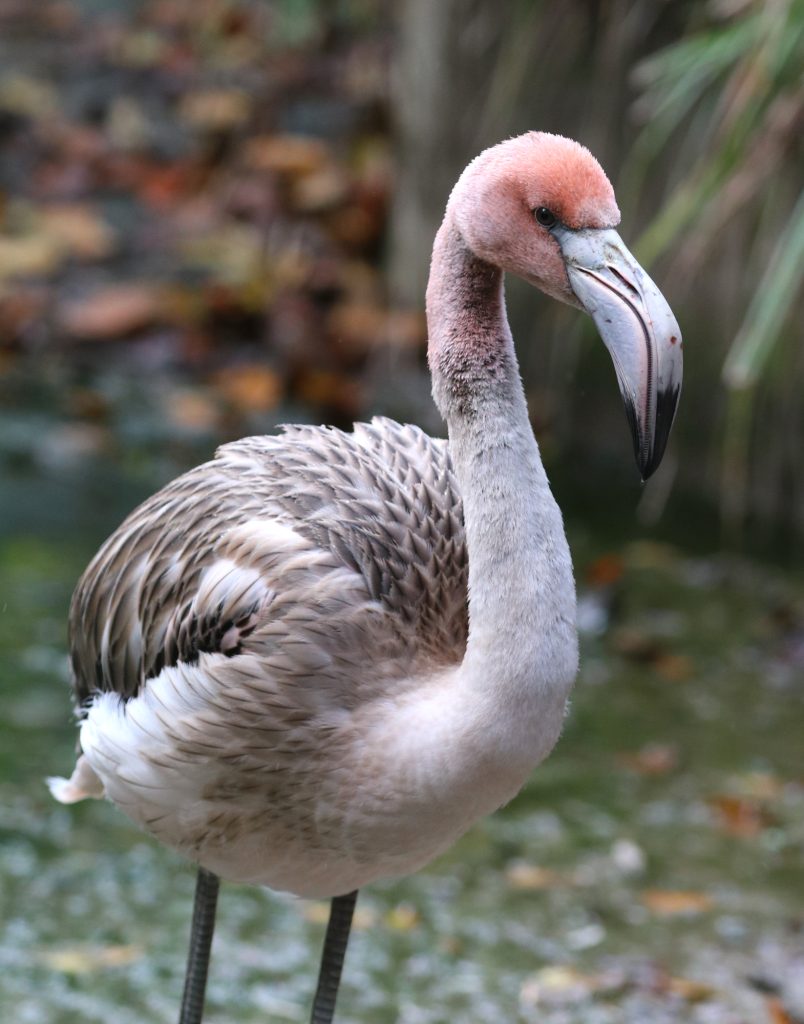
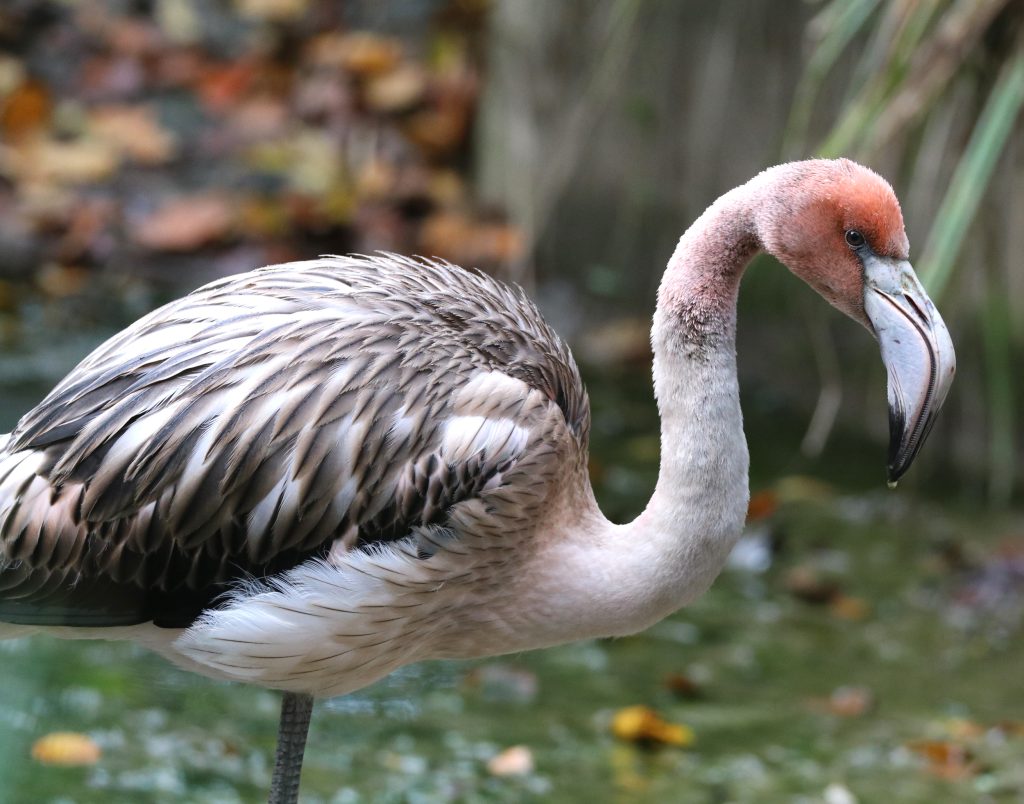
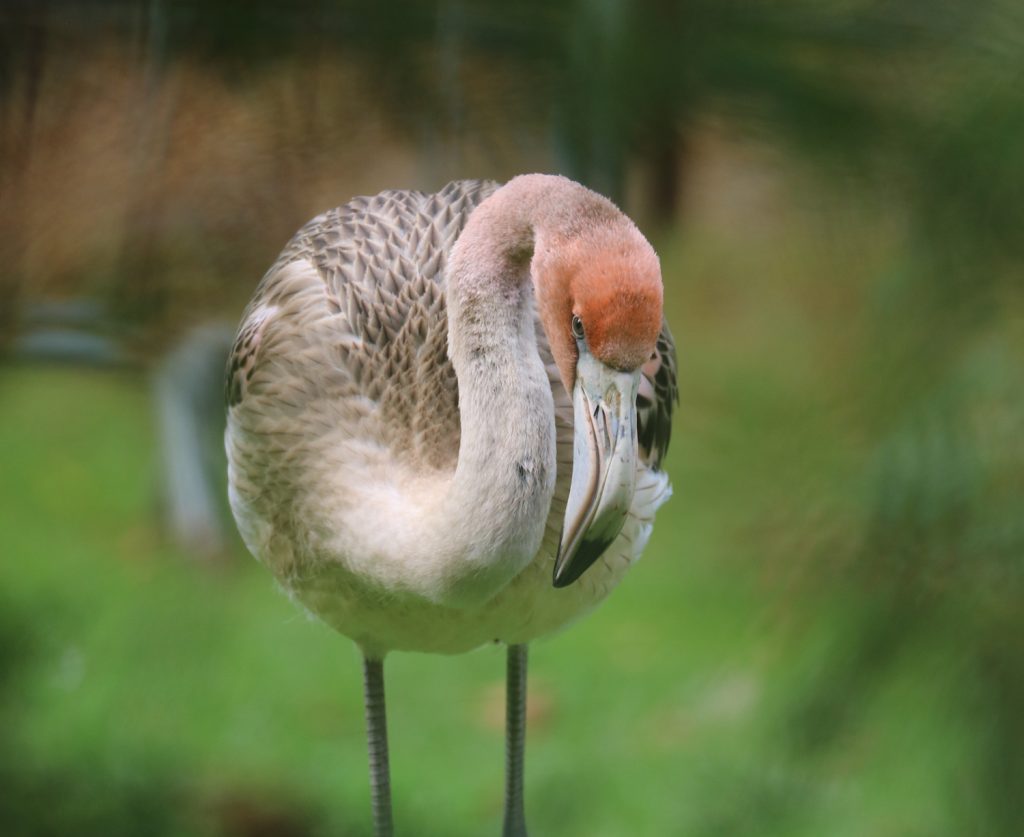
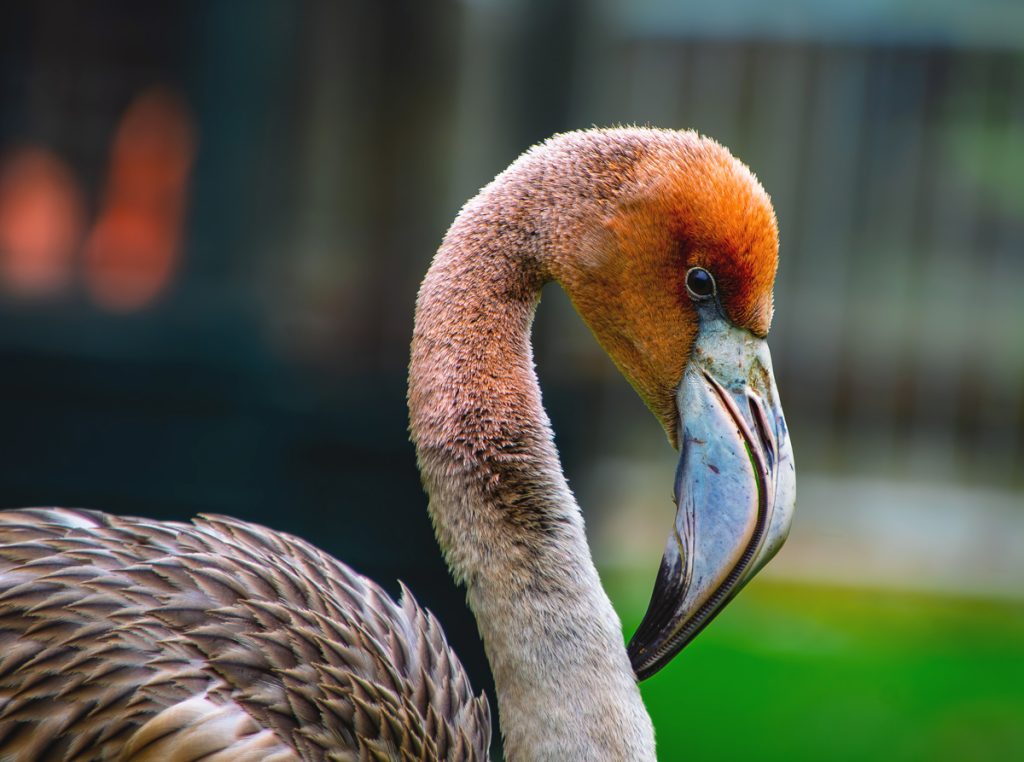
16th October 2025
The pink colour on her head is much stronger now.
Photograph below by Josh Ryan Murray.
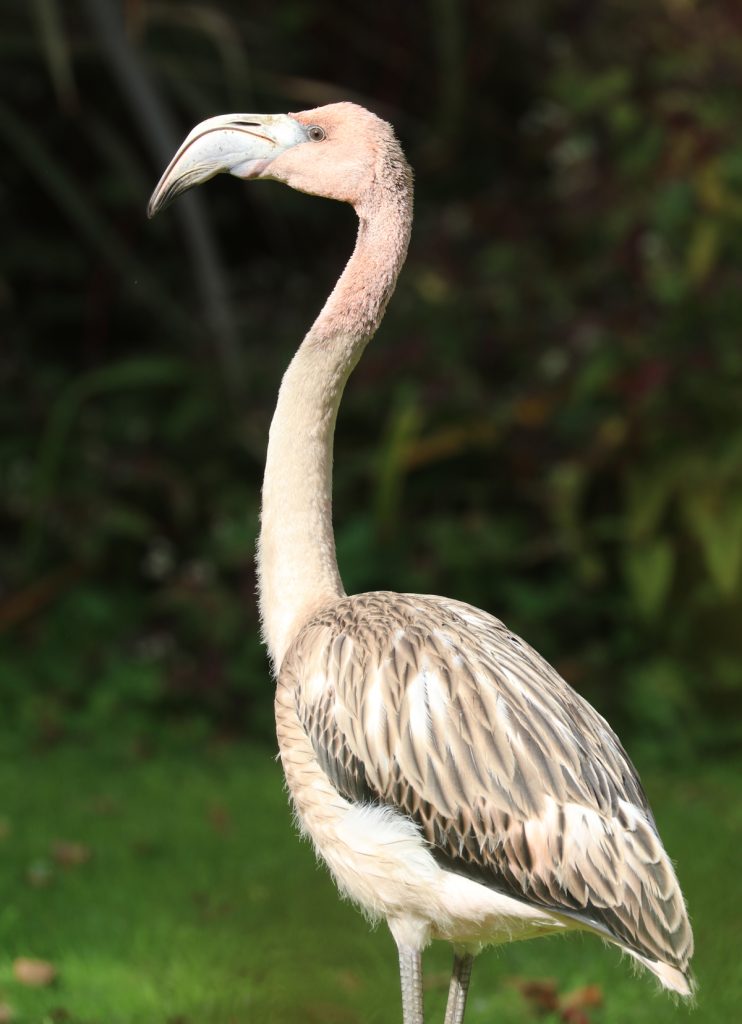
29th September 2025
Frankie posing for the camera!
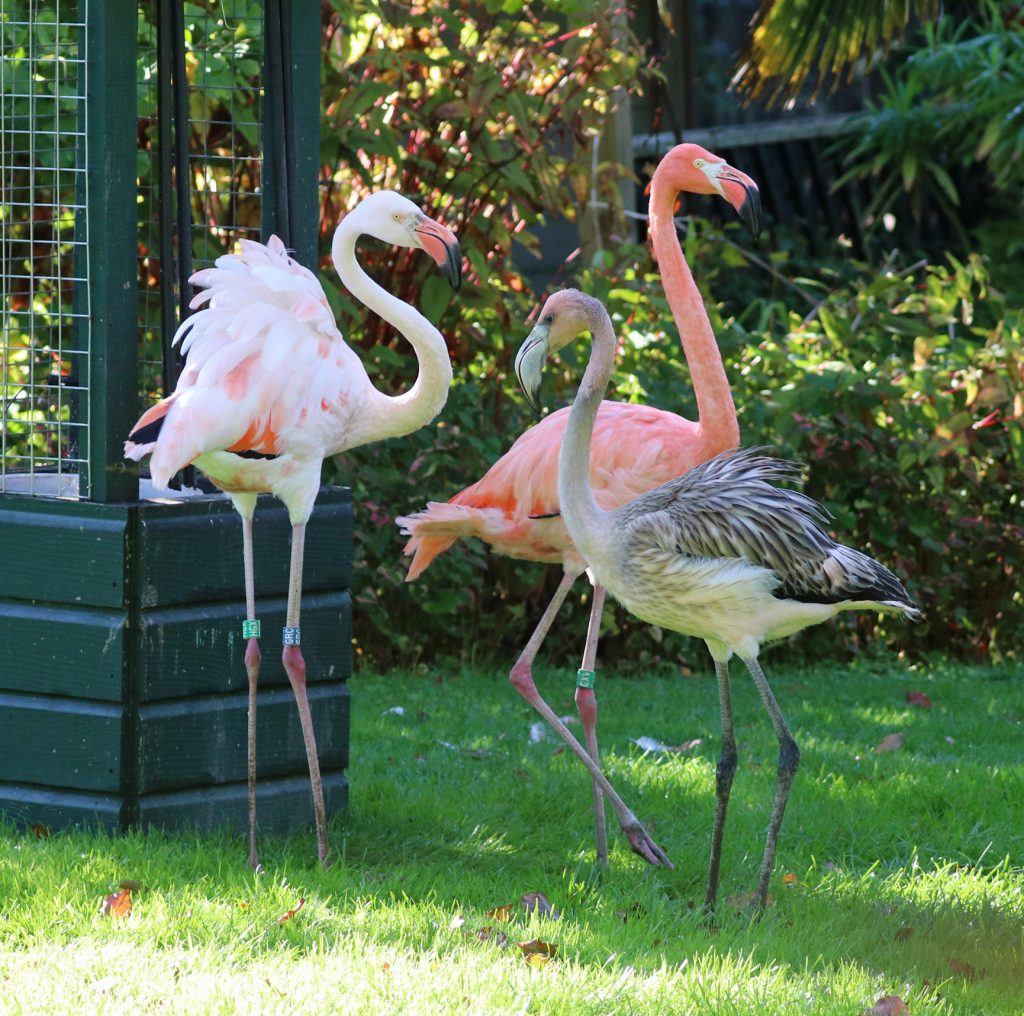
28th September 2025
Edwina, Anthony and Frankie, family photograph.
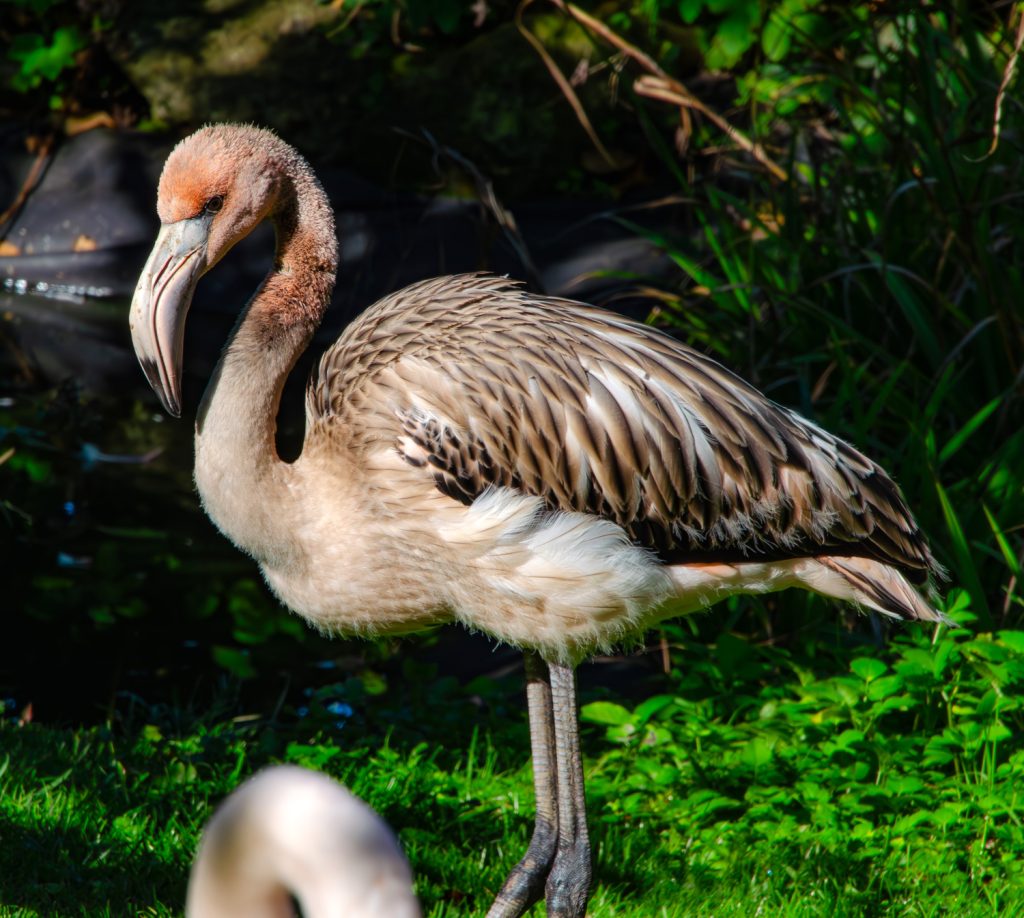
25th September 2025
Frankie growing up!
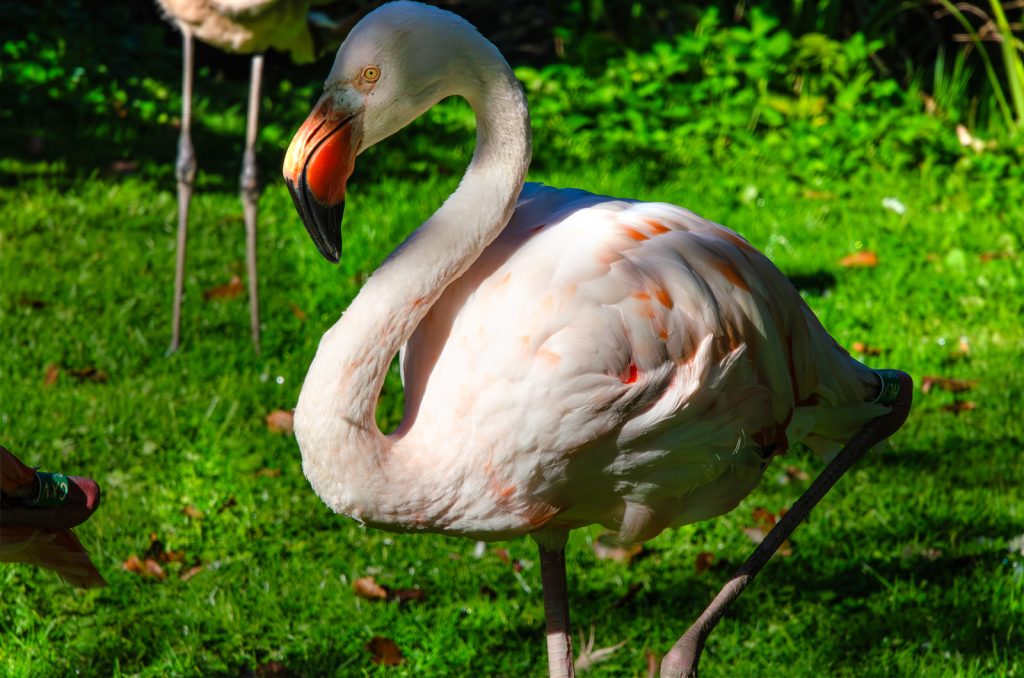
Below is dad Anthony.
Fascinating to see how much pink colour flamingo Anthony has lost while feeding young Frankie. He was obviously the main one feeding and is now almost white.
This is due to the special red liquid called “crop milk” they produce, which is rich in carotenoids and provides essential nutrients and pigments so Frankie will develop well and get that lovely pink colour. In the wild, the carotenoid pigments come from their diet of algae, crustaceans such as brine shrimp, and insect larvae. Our group has a diet designed for flamingos, a floating pellet which they relish and which includes everything they need. They also forage in their lagoon area for natural algae.
Frankie is now feeding on solid food and filtering the water in the lagoon, so her parents will stop producing the crop milk and will gradually gain their rich pink/red colouring again over the next year.
Photograph by Josh Ryan Murray.
15th September 2025
Here she is, Frankie feeding in the lagoon while her flock have a snooze. A little moment of peace.
14th September 2025
The DNA test results are in. Is Frankie a boy or girl?
31st August 2025
A close up of Frankie feeding.
Some of you may have noticed that Frankie’s parents, Anthony and Edwina, have both lost a lot of their pink colouration and have gone pale, and even white, in some places.
This is due to the special red liquid called “crop milk” they produce, which is rich in carotenoids and provides essential nutrients and pigments so Frankie will develop well and get that lovely pink colour. In the wild, the carotenoid pigments come from their diet of algae, crustaceans such as brine shrimp, and insect larvae. Our group has a diet designed for flamingos, a floating pellet which they relish and which includes everything they need. They also forage in their lagoon area for natural algae. Once Frankie moves on to solid food, his or her parents will stop producing the crop milk and will gradually gain their rich pink/red colouring again.

26th August 2025
Below is a very cute video of clips showing Frankie’s progress so far. Enjoy!
25th August 2025
A very casual looking Frankie.

21st August 2025, first vet check
Vet Paul Hall gave Frankie a first vet check, and he is happy to report that all is progressing well. Frankie is in very good condition and a good weight.
Frankie was very calm, being expertly held by Head of Softbills, Becky Waite, who commented: “This was an ideal opportunity to take a tiny blood sample which is now zooming on its way to be DNA tested, to finally find out if Frankie is a boy or a girl. We will know the result in a week or so, when we will do a big reveal.”

A very calm Frankie being held by Becky.

What lovely shades of grey and pink showing. Posing for the camera!


20th August 2025
Frankie being fed by dad Anthony. It will not be long before Frankie starts on solid food.


17th August 2025
Look at the pink feathers showing through on this close-up photo by Josh Ryan Murray.

14th August 2025
The youngest and the oldest. Frankie pictured with Alan, who is 37 years old.

In full stride!

13th August 2025
Frankie joins in with the flock and makes a cute jump.
11th August 2025
Frankie is really enjoying filtering the water in the muddy lagoon. You can see the beak is bent downwards much more now, making it easier. She also stretches a wing where you can see more development and the black edge feathers starting to show.
Is that pink feathers showing already?

4th August 2025
In this photo you can see the first feathers developing, known as pin feathers, which are encased in a protective sheath of keratin. This protects the growing feather and its blood supply as it emerges from the skin.

3rd August 2025
Frankie posing for the camera!


1st August 2025
Frankie trying to have a snooze and preening during a quiet moment.
30th July 2025
Frankie is cute from any angle!

29th July 2025
Frankie relaxing with the flamingo flock.

28th July 2025
Frankie has made another leap in size in the last couple of days. You can see the wings developing in this video clip from Josh Ryan Murray.
You can really see that the colour change has started, as Frankie is about to go through the grey phase.

25th July 2025
Frankie examining the sprayer.

24th July 2025
Frankie is really getting the hang of filtering the water, and can even do it standing on one leg.
Video clip by Josh Ryan Murray.
23rd July 2025
Do watch this cute clip as Frankie gets the zoomies! Many thanks to Scott and Nicky Goodchild for sharing their lovely video with us.
We are really beginning to see Frankie’s character. In both photos below, you can see the white is not so white anymore, as it starts to transition to grey, which is the next stage before we start to see hints of pink appearing in a couple of months.
Photo by Josh Ryan Murray.

Below: Frankie having a morning rest. Photo by Director Alison.

21st July 2025
Looking like there is grey now under Frankie’s feathers, so the beginning of the grey phase.

20th July 2025
Notice how the beak is just beginning to bend downwards. It will be a little while yet before it develops enough for the chick to be able to feed and filter like an adult.

The photo below is the one that was posted on 21st July to announce that the winning name for the chick was Frankie.

18th July 2025
Mum Edwina is feeding the chick, with dad proudly watching.

17th July 2025
In these photos, you can see the special red liquid known as crop milk, which provides essential nutrients for the flamingo chick’s growth and development before it transitions to eating adult food.
Photographs by Josh Ryan Murray.


How big! In the last couple of days, the chick has grown so much it is almost too big for the mud nest.
15th July 2025
It’s time to “Do the Flamingo Stomp”.
The flamingo chick has learnt to stomp its feet in the water to stir up food from the muddy bottom of the lagoon. I’m sure the little squeak the chick gives mum Edwina at the end is saying, “Did you see me do that?”
14th July 2025
Standing up to its full height, the flamingo chick is two weeks old.

13th July 2025
Director Alison captured this photo showing the chick now beginning to sleep on one leg, just like the adults. The chick’s legs are looking very grey, almost black in colour, which is all part of the process, although of course some of this may be mud. The inset photo shows the chick from a week ago with pink legs. They will eventually go pink again, but there is a big grey phase which the chick will go through first, and we will be posting to keep you updated as things develop.


12th July 2025
Look at how big the chick has grown in its first 12 days. Also starting to stand on one leg for a few seconds.
Video clip by Josh Ryan Murray.
11th July 2025
The flamingo chick got the zoomies and Director Alison managed to capture this photo.

10th July 2025
The little chick is already learning to go through the motions of filtering the water like its parents, although it will be a while yet before the beak gradually curves downward as it matures, developing the filter-feeding capabilities of an adult flamingo. Initially, the straight beak is used to receive crop milk from its parents, and later for feeding on larger food particles.
9th July 2025
Below: It is so noticeable how much bigger the chick is getting every day. These photos are by Josh Ryan Murray.


8th July 2025
Below: Flamingo chick pictured with some of the flock on the lawn. By Manager Ray.


Below: Edwina is master of feeding her chick while standing on one leg!

7th July 2025
The chick is now brave enough to venture out of the lagoon with its parents and onto the flamingo lawn with the rest of the flock.


Below: Dad Anthony feeds his chick the special high-energy red liquid known as crop milk, which is crucial for the first weeks of the chick’s life before it transitions to eating adult food.
6th July 2025
Below: Mud, glorious mud! The chick is much stronger and exploring its surroundings.


Below: Feeding from mum.

4th July 2025
First big adventure! This is a bit of a longer video, but well worth watching all the way through. This is the first time the chick has been encouraged to get its feet into the muddy lagoon by its parents and is then led safely back to the nest for a rest. Big thanks to visitor Laura Herbert for sharing her video.
3rd July 2025
Below: Legs getting stronger.

Below: First time out of the nest.

Below: Exclusive clip, the chick struggles a little to climb back up for the first time, but does manage it and snuggles up with mum.
Below: Resting with dad.

2nd July 2025
Below: Edwina and Anthony are staying right with it, one in charge and the other nearby except for going off to feed for a short while. We are now seeing the chick make little efforts to stand on its chubby pink legs.

Day one, 1st July 2025
Chick stands for the first time just hours after hatching.
Chick still very shaky in the nest.
This wonderful photograph shows Edwina feeding her chick a special high-energy red liquid known as crop milk, which is crucial for the first weeks of the chick’s life before it transitions to eating adult food.

Below: Both parents, Edwina on the nest and Anthony on the right, with their new chick.

Below: The chick hatched early in the morning and was visible to visitors when they arrived at 10am. Still with egg-shell in the nest, the chick looks good and healthy.
